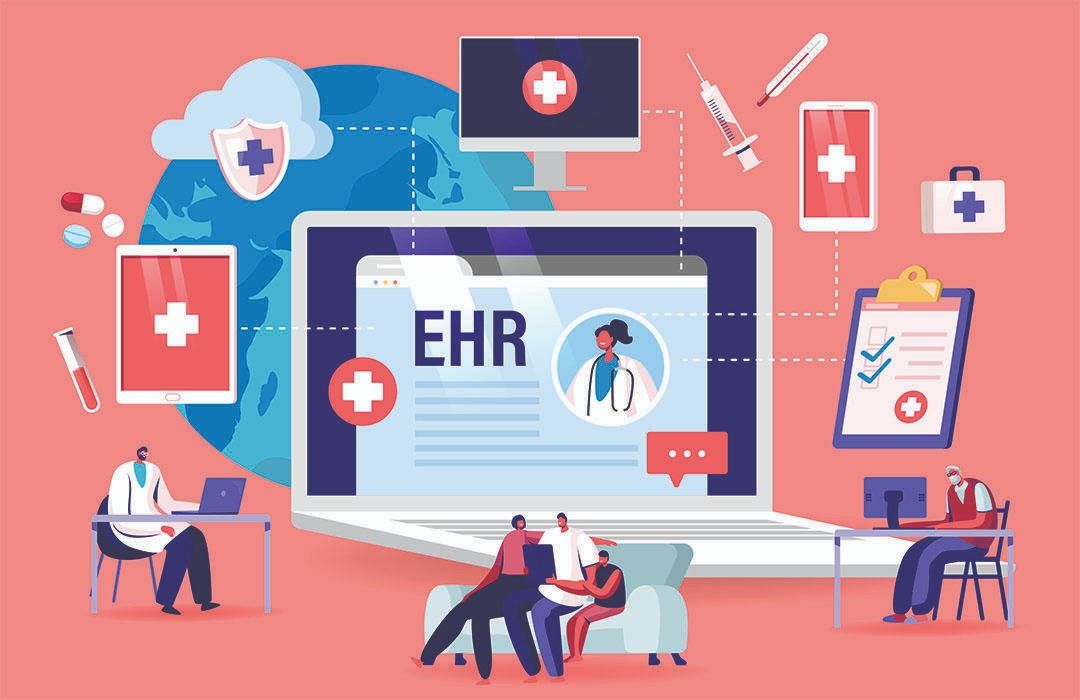
Contemporary healthcare system requires efficient decision making and this cannot be done only by building up experiences. However, it is more and more dependent upon timely and precise data. This is where Electronic Health Records (EHRs) take over handling and improving the procedure of managing patient information and decision making. EHRs provide efficient means of getting consistent, timely and accurate medical information allowing for implementation of the full potential of data supporting the decision making process for providing better care.
The Role of EHR in Centralizing Data
Perhaps the biggest benefit of EHR systems is the possibility to collect patient information in one electronic format. Structured and unstructured data from clinical notes, diagnostic tests, medications history, treatment plans and many others; these all are stored in EHRs. It does away with paper-based records that are not only time-consuming but also siloed applications, keeping patient information inaccuracy, providing clinicians with a patient’s records on their fingertips.
This makes it easier for the clinician to find pieces of information relevant for a particular patient, for instance past diagnoses or results of recent tests. This centralized access is essential in providing valuable information, given specific circumstances where each passing second is critical. For instance, an ER physician can easily have details about a particular patient; more specifically, the surgeon can find out that a certain drug is poisonous to the patient because of allergies.
Enabling Predictive Analytics and Personalized Care
EHRs are not just repositories of information; they allow organizations to interpret data. The incorporation of predictive analytics into EHR entails meal that trends that would otherwise not be easily discerned can be easily discovered. From the historical patient data, the clinicians can be able to determine the risks of specific health outcomes, and do everything possible to prevent such outcomes.
For example, there is the potential for using predictive models for chronic illnesses such as diabetes or hypertension, risk factors include family history, and lifestyle choices. This capability enables early identification process and then gives a specific course of action in addressing their problems.
At DrPro, we’ve seen firsthand how advanced EHR solutions enhance predictive analytics. With tools designed to leverage patient data effectively, healthcare providers can transition from reactive care to proactive, preventive approaches, ultimately improving patient satisfaction and outcomes.
Supporting Evidence-Based Decision-Making
As has been established, evidence-based medicine combines the clinician’s judgment with the research data. Very often, EHRs facilitate this process through access to clinical practice guidelines, treatments protocols, as well as nationally/peer-reviewed studies from within the platform.
For example, when a clinician is treating a patient with an uncommon disease, the EHR contains best practices that are recommended by various authors. This makes sure that the selected treatment is best and is in conformity with that of the modern medical practice with regard to the discrete situation of the patient. Moreover, the EHR systems that integrated with decision support function can alert practitioners about potential drug to drug interaction, drug to patient interaction, dosing errors or any contraindicated issue to minimize medical errors.
Enhancing Collaboration Across Healthcare Teams
Healthcare is not an action that is provided by a lone specialist — as a rule, it is a team who creates the best outcome. EHRs improve co-ordination since data can easily be transferred between various providers, departments and even facilities.
Also in coordination of care when a primary care physician is consulting a specialist or a hospital is sharing the discharge summary with a rehabilitation facility, the EHR makes sure that every clinician receives the same updated information regarding the patient. Aging care decision-making is not just facilitated by this approach but the continuity of care is also increased.
For example, use of a shared EHR supports better cooperation between oncologists and radiologists when considering a course of treatment of cancer. All core information can be accessed in this case, and this allows the various members of a team to come up with good decision making, other than having to wait because of lack of key information.
Leveraging Population Health Management
However, beyond the patient-centered use, EHRs are critically important to population health. EHRs are capable of forming the behaviour patterns of different facility levels of a community thus revealing the trend of a certain or course of an organization.
This data can be used to examine people’s health risks, for instance, enhanced rates of flu within a certain area or growing prevalence of a certain form of chronic disease. It will help care providers to better direct resources, design intervention approaches and inform the public on ways of preventing the disease.
For example, during the COVID-19 pandemic, EHRs were instrumental in tracking infection rates, identifying at-risk populations, and coordinating vaccination efforts. This highlights how data-driven insights derived from EHRs can influence decisions that go beyond the individual to impact entire populations.
Driving Operational Efficiency
In addition to clinical benefits, EHR hospital system contribute to operational efficiency by automating routine tasks and streamlining workflows. Features like automated reminders, electronic prescribing, and billing integration reduce administrative burdens, allowing healthcare professionals to focus more on patient care.
Efficient workflows directly impact decision-making by reducing the time and effort required to gather and analyze information. When clinicians spend less time searching for data or managing paperwork, they can devote more attention to interpreting the information and determining the best course of action.
Overcoming Challenges in EHR Adoption
While the benefits of EHRs are undeniable, their implementation is not without challenges. Issues such as high initial costs, data security concerns, and resistance to change can hinder adoption. However, with advancements in technology and increasing awareness of the value of data-driven decision-making, these barriers are steadily being addressed.
Choosing the right EHR solution, like those offered by DrPro, can make a significant difference. User-friendly interfaces, robust security features, and customizable tools ensure that healthcare organizations can maximize the benefits of their EHR systems while overcoming potential hurdles.
The Future of Data-Driven Healthcare
As technology continues to evolve, so too will the capabilities of EHR systems. The integration of artificial intelligence, machine learning, and big data analytics promises to take data-driven decision-making to new heights. Future EHRs may offer even more sophisticated predictive models, real-time risk assessments, and personalized treatment recommendations.
Furthermore, advances in interoperability will enhance the sharing of data across different systems and platforms, breaking down silos and fostering a truly connected healthcare ecosystem. With these developments, EHRs will become an even more powerful tool in empowering providers to make decisions that are not only data-driven but also deeply informed by the unique needs of each patient.
Conclusion
The transformative potential of Electronic Health Records lies in their ability to turn raw data into actionable insights. By centralizing information, enabling predictive analytics, supporting evidence-based medicine, and enhancing collaboration, EHRs empower healthcare providers to make informed decisions that improve patient care and operational efficiency.
As healthcare continues to embrace digital innovation, leveraging EHRs for data-driven decision-making will be key to addressing the challenges of modern medicine and achieving better outcomes for patients and communities alike.