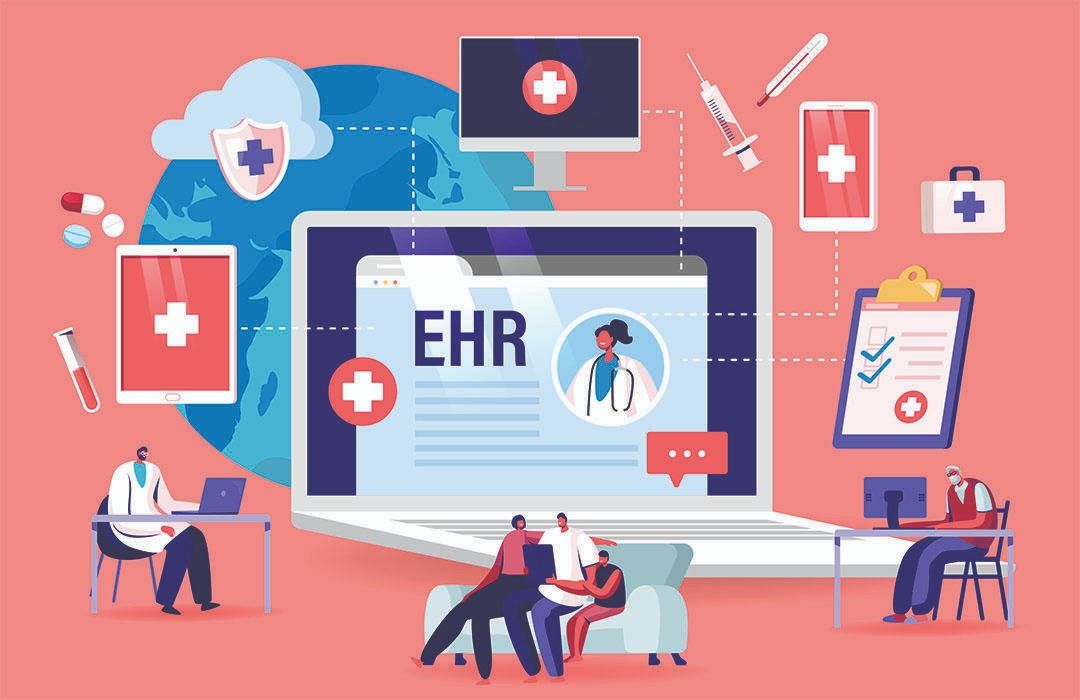
Still, the purpose of this paper is dedicated to the fact that the healthcare industry has changed significantly during the last decade due to various technologies. Leading this revolution is artificial intelligence that is quickly finding its way into Electronic Health Record (EHR) systems. pify these systems, the EHRs that initially were electronic versions of paper based medical records have undergone a transformation into a tool that can enhance the entire clinical processes and patient care. The addition of AI into EHR systems create a new avenue in healthcare improvement that brings about efficiency and improvements to the system.
Enhancing Data Management and Accessibility
That is why one of the most critical concerns of conventional electronic medical record systems is data management. Since healthcare facilities produce colossal amounts of data daily, it becomes hectic for clinicians to go through this data to extract useful insights. That is, integrated EHR systems powered with artificial intelligence meet this need by analyzing patients records in real-tine.
NLP, which is part of AI, helps EHRs to understand free text formats that come from physician’s notes, lab results, and patient’s history. Bedside access to patient information is more convenient and, therefore, usable than when information is kept in files or in remote locations. One must also remember that instead of spending hours looking for crucial pieces of information, the clinician can simply let the AI do that for him or her instead.
Furthermore, patterns can be generated to identify patient records analyzed by the providers, with trends in health, risks to expect, and accurate care. For instance, an advanced EHR system can flag a doctor if a patient is susceptible to develop a chronic disease in the future using data from the patient’s past records and contact the doctor for early treatment.
Streamlining Clinical Workflows
AI is also engaging in enhancing the usability of several clinical processes within EHR systems. Some of these tasks include appointment scheduling, billing and documentation have over the years inconvenienced healthcare providers as they act as a interference to direct patient care. Fortunately, effective workload can be lessened through the help of AI- assisted automation.
For instance, AI tools can automatically populate fields in a patient’s record, reducing the time spent on data entry. These systems can also assist with coding and billing by identifying appropriate codes for medical procedures, ensuring compliance and accuracy. Such innovations not only enhance productivity but also minimize burnout among healthcare professionals, which has been a growing concern in recent years.
Advanced Decision Support Systems
These excellent functionalities have improved the integration of decision support systems with EHRs powered by AI. Using data from diverse sources, the AI EHR systems give clinicians suggestions on diagnosis and treatment for the patients. It very useful to improve the quality of service and to minimize the likelihood of wrong diagnosis.
For instance, if a patient has signs and symptoms that may fit different diseases, an AI operating EHR would be able to consider the patient record, the patient’s genetic profile and most recent investigations to offer the most likely diagnosis. In addition, it can provide possible courses of action and treatment decisions based on scientific data, so that providers have a great reference tool with the available current literature at their fingertips.
Another disruptor that comes with AI is the possibility to do predictive analytics. Analyzing the data that has accumulated over several years allows EHR to predict outcomes and plan healthcare interventions. For instance, an AI system could flag the following risk that a patient may be readmitted to the hospital and treat it before it happens.
Personalizing Patient Care
When it comes to the implementation of personalized medicine, it is no longer a concept of the future, as modern EHRs controlled by AI create this concept. This is because, unlike human doctors or health care practitioners, AI has the capacity to analyze figures including a patient’s genetics, diet, and disease history in order to regularly offer personalized treatment.
For instance, using AI, an oncologist can determine from the patient’s genomic makeup and past response to chemo therapy the most helpful chemical dose for a cancer patient. In the same way, AI integrated EHRs can suggest the appropriate ways that would prevent vulnerable populations from getting certain diseases, enabling individuals to become advocates for their own health.
Also, due to AI’s help, patients and providers find it easier to communicate with each other. Incorporating chatbots as a part of EHR solutions enables them to respond to patient questions, deliver reminders and schedule follow-up appointments to keep patients engaged and also increase success rates constantly.
Enhancing Interoperability
As explained earlier, the adoption and operation of interoperability in healthcare has proven to be a problem area in the past. While there are many EHR vendors and conflicting systems, it has been challenging to automatically transfer a patient’s records from system to another. AI is integrate at this in that it is encouraging setting of standard on data formats as well as making data interoperable.
Machine learning algorithms can map and reconcile inconsistencies between disparate EHR systems, enabling healthcare providers to access a comprehensive view of a patient’s medical history regardless of where the data originated. Enhanced interoperability improves care coordination, particularly for patients who see multiple specialists or receive care at different facilities.
Addressing Data Security and Privacy
As EHR systems become more sophisticated, ensuring data security and privacy remains paramount. AI plays a crucial role in safeguarding sensitive patient information. Advanced AI algorithms can detect unusual patterns in system activity, such as unauthorized access attempts or anomalies that may indicate a cyberattack.
AI-powered encryption techniques further protect data during transmission and storage, ensuring compliance with regulations like HIPAA. Moreover, AI-driven identity verification methods, such as biometric authentication, add an extra layer of security, preventing unauthorized access to patient records.
The Role of DrPro in Driving Innovation
Leading the way in integrating AI with EHR hospital systems is DrPro, a company committed to transforming healthcare delivery. DrPro’s AI-powered EHR platform exemplifies how technology can enhance efficiency, improve patient outcomes, and simplify clinical workflows.
DrPro’s platform incorporates advanced decision support tools, predictive analytics, and seamless interoperability features, enabling healthcare providers to make informed decisions quickly. By prioritizing user-friendly interfaces and robust security measures, DrPro ensures that clinicians can focus on what matters most—providing exceptional patient care.
The Future of AI in EHR Systems
The integration of AI with EHRs is still in its early stages, but the potential is immense. As technology continues to evolve, future AI applications could include real-time language translation, virtual health assistants, and even more sophisticated predictive analytics. These advancements will further enhance the accessibility, efficiency, and effectiveness of healthcare delivery.
However, challenges remain, such as addressing biases in AI algorithms, ensuring data quality, and obtaining widespread adoption among healthcare providers. Collaboration between technology developers, healthcare organizations, and policymakers will be critical to overcoming these obstacles.
Conclusion
AI is revolutionizing Electronic Health Record systems by transforming how data is managed, improving clinical workflows, enhancing decision-making, and personalizing patient care. By addressing long-standing challenges such as interoperability and data security, AI is paving the way for a more efficient and patient-centered healthcare system.
As organizations like DrPro continue to innovate, the future of EHRs looks brighter than ever. With AI as a driving force, healthcare providers can deliver more accurate, efficient, and personalized care, ultimately improving the quality of life for patients worldwide.